In the past year or so there has been a large change in the way many Americans view Israel.
For decades a bit untouchable (with any criticism of it labeled “anti-Semitic”), especially with Evangelical Christians, many including some Evangelicals and young Catholics have altered their views, mainly in the wake of the mass killings in Gaza (which had followed a brutal Palestinian attack on Israel).
Certain podcasters have gone so far as to connect modern Israel with the “Synagogue of Satan” referred to in two passages of Revelation (2:9 and 3:9) where Jesus criticizes a group that “say they are Jews and are not.” The political MAGA movement, once solidly pro-Israel, is now profoundly divided.

Historically, this phrase—”Synagogue of Satan”—has been used to justify antisemitism, though scholars argue the author of Revelation was likely Jewish and that when He used that phrase, Jesus was referring to non-believing Jews.
Some of the antagonism—which is present around the world—has come from the exclusionary nature of many Jewish groups, who through history have often isolated themselves from the mainstream, including economically, which is frequently seen as greed and arrogance. Others view it as simple self-defense: Jews have been opposed by countless groups and nations since Old Testament times and especially since the Diaspora (scattering from Israel).
On March 3 the “Purim” takes place, a celebration by Jews of their deliverance from Persian (as in Iranian) persecution thanks to Queen Esther (see the Book of Esther in Scripture). We are going back here five centuries or thereabouts before Christ. This year, most interestingly, a “Blood Moon” takes place on that date.
Those who dislike Jews cite their Crucifixion of Jesus and stories Jewish now call “blood libel” that they kidnapped and murdered non-Jewish (particularly Christian) children to use their blood in religious rituals. (The antisemitic accusation, which scholars long have declared a myth, originated in the Middle Ages and has caused massacres, tortures, and expulsions.)
Three years ago, 54 percent of Americans sympathized with the Israelis compared to 31 percent for the Palestinians. Now, according to one recent poll, only 36 percent support them (while 41 percent align with Palestinians).

Some in the now-infinite universe of podcasts have even questioned whether Jews who claim a right to Israel are actually genetic Jews (Hebrews) to begin with. The fourth and first female prime minister of the modern state of Israel, Golda Meier, was born in Kiev, Ukraine, and emigrated with her family to the United States before going in 1948 to the newly created Israel.
 It’s not an “anti-Semitic” question—the issue of genetics—and it dates back largely to in fact a Jewish writer named Arthur Koestler, who, in The Thirteenth Tribe, argued convincingly that most modern “Jews” are actually descended from Turkish and East European Christians who converted in the Middle Ages (around the eighth century) to avoid slaughter when Islamic invaders were conquering the Middle East and southern and Eastern Europe and killing Christians.
You read that correctly: when it came to Muslims (“Moors”), it once was more dangerous to be Christian than Jewish.
But is it true? Are modern Jews—many of whom look decidedly different than darker-skinned Palestinians and other Arabs—actually descendants from ancient Israelites? Or are they mainly East European (specifically Czechoslovakian and even German) and “Jewish” only by culture and religion?
Is it their European features that make them fit like oil and water among Arabs?
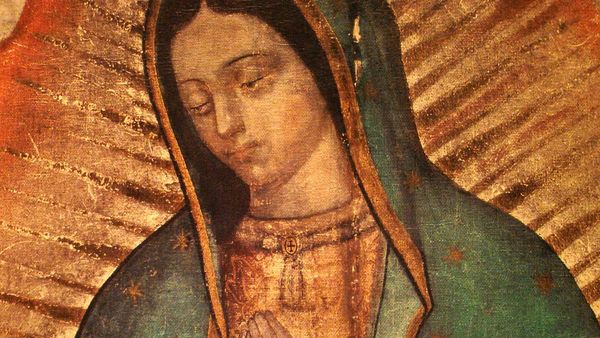
What did Jesus actually look like? [scroll for more:]
Koestler may have been wrong. The latest studies indicate that many Jewish populations and Palestinians share substantial ancestry that traces back to the Levant and that genome-wide studies often place many Jewish groups (Ashkenazi, Sephardi, Mizrahi) relatively close—genetically—to other Levantine peoples (including Palestinians, Druze, Lebanese), with differences reflecting later regional mixing and community history.