


Few know that the convicted sex trafficker Ghislaine Maxwell’s super-wealthy father, Robert, whose protege was Jeffrey Epstein, and who likewise died suspiciously (in 1991 falling off a yacht named for his daughter), is buried in one of Jerusalem’s holiest locales, the Mount of Olives.
Maxwell, who owned a British media empire, rivaling Rupert Murdoch, and was strongly suspected of ties to several intelligence agencies, especially Israel’s MOSSAD, and was widely considered a corrupting influence wherever he went (eventually guilty of stealing hundreds of millions from his company’s pension fund), had been a huge Israeli donor but not a citizen. Born in Czechoslovakia, he became a British citizen. But his funeral was attended by Israel’s president, prime ministers, and six former heads of Israeli intelligence.
This, of course, tells us much. (It may also tell us much about Epstein.)
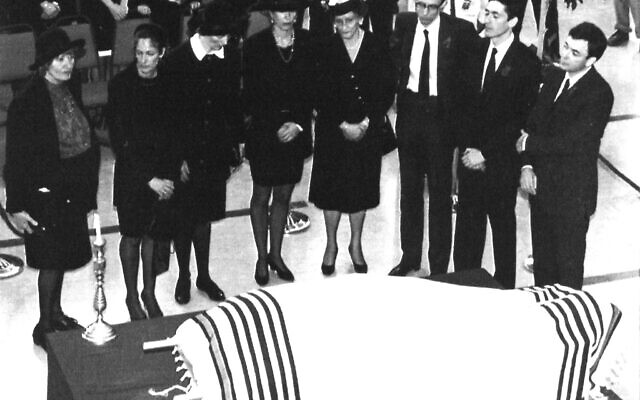
Maxwell helped Israel during the 1948 Arab-Israeli war, assisted Israel in securing critical Czechoslovakian planes and other arms, bought a stake in a large newspaper in Israel, and helped Soviet Jews emigrate to the new nation. He had lost almost all his family in Auschwitz. He was a member of the British parliament and died after “falling” off a yacht he owned called “Lady Ghislaine” after his daughter (who reportedly was abused by him; she is in photo above).
We’ll not judge. We will pray for his soul and abuse victims everywhere. A lot of shady stuff.
But back to the peculiarity:
The sacred ridge known as the Mount of Olives has often been a battlefield between divine truth and human deception. To understand the spiritual weight of this ground, one must look at the nearby southern ridge, infamously dubbed the Mount of Corruption or the Mount of Offense. It was here that King Solomon, though gifted with unmatched wisdom, allowed the “lies” of pagan idolatry to take root.
By building high places for the false gods of his foreign wives, Solomon turned a site of holiness into a monument of spiritual betrayal, proving that even the wisest heart can be led astray by the whispers of the world.
The Mount of Olives stands as the ultimate topographical witness to the life, agony, and triumph of Jesus Christ. It was the site of the Olivet Discourse, where the Lord stripped away the veil of the future to warn His disciples of the deceptions and tribulations that would precede the end of the age.

In the shadow of these ancient trees, Jesus looked over Jerusalem and wept, seeing the spiritual blindness of a people who could not recognize the time of their visitation. This mountain is where the most profound spiritual warfare in history occurred, specifically within the Garden of Gethsemane. There, amidst the pressing of the olives, the Savior buckled under the weight of the world’s sins and the ultimate lie of death, only to emerge victorious through perfect submission to the Father’s will.
Old Testament history further cements this mount as a place of profound transition and testing. When King David was betrayed by his own son, Absalom, he fled the city and ascended the Mount of Olives, weeping and barefoot. It was a moment of raw vulnerability and a precursor to the “Man of Sorrows” who would later traverse that same path.
Yet, for all its history of sorrow and corruption, the Mount remains the focal point of the Great Hope. The prophet Zechariah speaks of a day when the Lord’s feet will stand once more upon this mount, causing it to split in two and signaling the final defeat of all falsehood. It is the place from which Christ ascended in glory and the very gate through which He is prophesied to return, finally silencing every lie of the enemy forever.
[resources: Michael Brown online retreat]