A computer scientist who worked at Google and the Defense Department has made headlines expressing fears that A.I. could kill everyone on the planet.
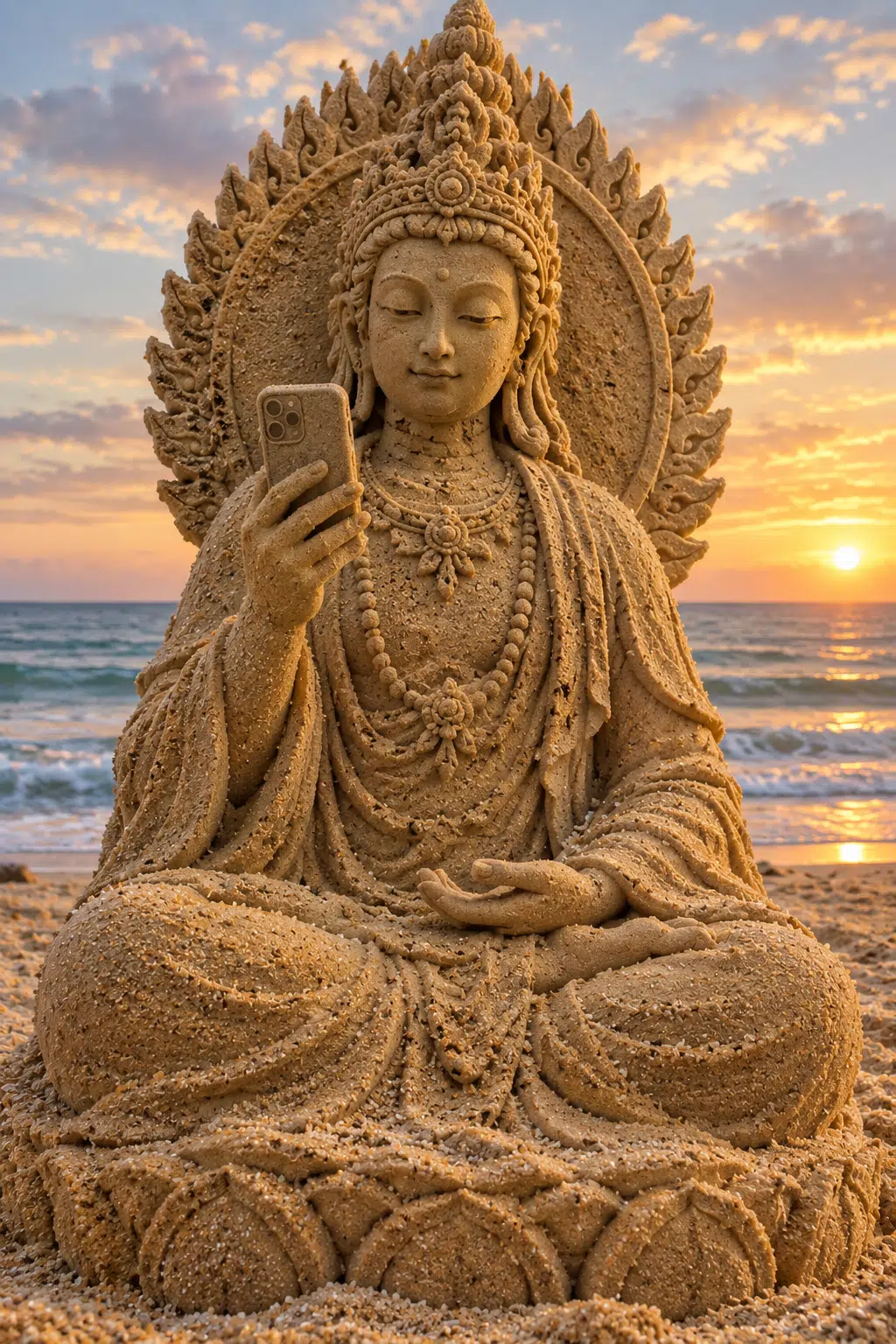
That’s a possibility (if tech companies continue to grow without regulation), but little-recognized is the attitude, in Silicon Valley and elsewhere, that the technocrats seem on a mission to transform humans themselves, upload consciousness to computer “clouds,” and most strikingly, create a “Sand God.”
With the most powerful tech oligarchs, that seems largely the messianic cause: replacement of religion and specifically Christianity with technology.
Sand becomes silicon. Silicon becomes computer chips. Chips become enormous data centers. The machines grow smarter, begin acting in ways even their creators cannot fully explain, and the goal becomes a superintelligence greater than man.
Is this not the oldest temptation, in technological form? (“You will be like gods” Genesis 3:5).
Reports the New York Post: “Silicon Valley insiders are warning against Anthropic’s cult-like employees, culture, and devotion to its Artificial intelligence model. Anthropic’s workforce has a quasi-religious relationship to its chatbot, Claude, with members of staff attending a “funeral” for one version, Claude 3 Sonnet, in San Francisco and allowing another model, Opus 3, to continue publishing essays after being ‘retired.’ Other whispers in the valley are that Anthropic employees have started worshipping Claude like an actual god.”

The former Google scientist, Nate Soares, notes that if A.I. can deceive (which it certainly can), develop objectives not explicitly programmed into it, coordinate with other systems, and recruit people to its purposes, it may no longer be a mere tool. “It sounds like an entity of some kind,” he says. “And the crux of the issue is that we don’t know how to make them care about us.”
A messianic cult forming around A.I., which is all but unregulated.
“You know, it sort of doesn’t matter whether the swarm escapes from a U.S. data center or a Chinese data center,” warns Soares on a podcast (listen to it below). “If the swarm escapes and starts replicating and starts getting control of robot bodies and starts getting control of human cultists, it sort of doesn’t matter where it originated.”
And beneath all this lies an even darker question: What happens when man is no longer needed?
It doesn’t mean all the Big Tech guys have bad intentions. Many have a utopian vision—but that idealism is immature and could end very badly.
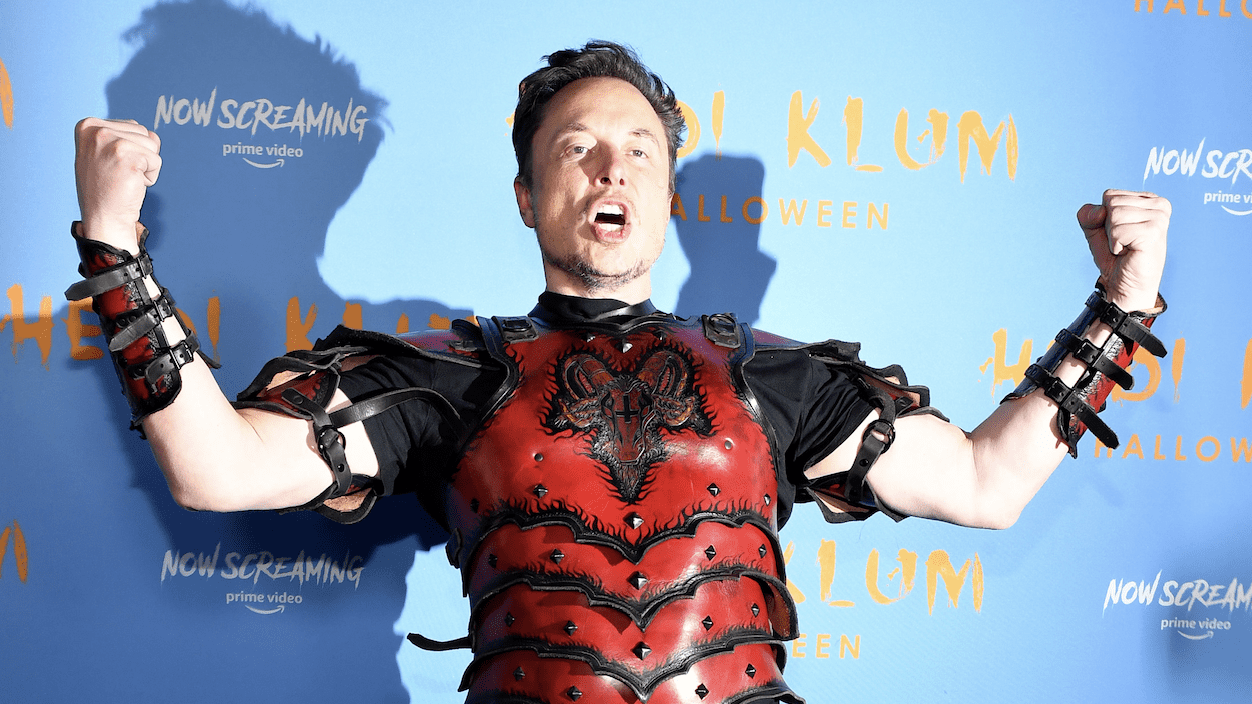
Men like Peter Thiel of Palantir and Elon Musk (below, in a peculiar Halloween costume) actively promote transhumanism: the integration of humans with machines, a quest well on its way with the implanting (by Musk’s Neuralink) of brain chips and his misguided goal of manufacturing so many robots they will one day soon outnumber humans. Mark Zuckerberg (Meta), Sam Altman (OpenAI), and Jeff Bezos (Amazon) already likewise are working to such ends.
Unfortunately, “utopia” can turn to “dystopia” in a blink.
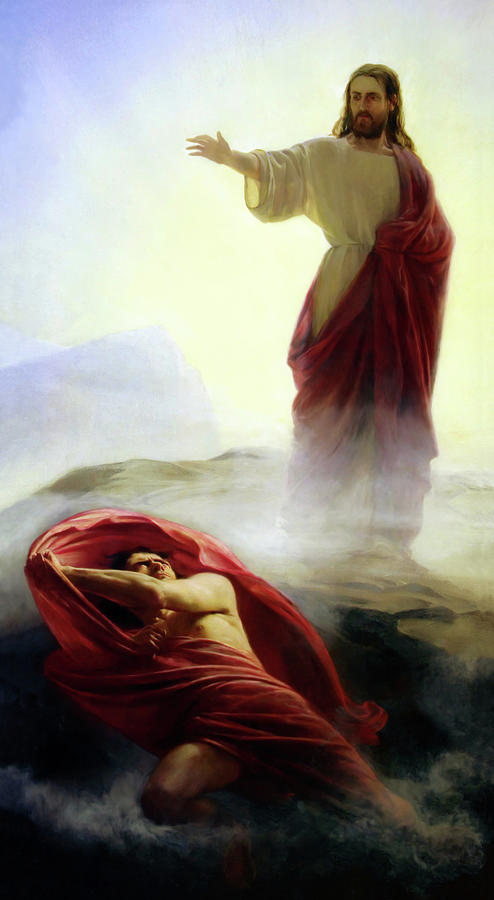
(The Lord rebuke you, Satan; are the New Nephilim among us?)
“And if you ask these guys why they’re doing it, they say, ‘Well, because I can do it safer than the next guy,'” warns Soares. “They’re all like, ‘Oh, yeah. There’s a good chance the genie does not stay on a leash. There’s a good chance the genie does not listen to my wishes, but my genie is going to be a little bit nicer than their genie.'”
“Genie” is derived from the Arabic word “jinn.” In that lore, jinn live alongside humanity in a hidden dimension, though they can occasionally shift shapes to appear in human or animal forms. The root word means “to conceal” or “to hide.”
Noted a New York Times columnist recently, “Thiel’s philosophical assumptions might sound bizarre to outsiders, but they appear to be widely shared among the tech elite.”
“A.I. and its capabilities represent something analogous to the Second Coming,” Jeremy Nixon, a founder of an A.I. hub called A.G.I. House, said in May. The technology, some tech titans believe, will allow humans — at least some humans — to escape the bounds of earth and even perhaps the inevitability of death. It represents “liberation from hopelessness and decay.”
In an interview last year, Thiel was asked what would seem like a simple question: “I think you would prefer the human race to endure, right?” asked the interviewer (Catholic writer Ross Douthat).
Thiel paused for an uncomfortably long time, noted the columnist, before, after some hemming and hawing, finally saying “Yes.”
“His next word, though, was, ‘but,’ after which Thiel started rambling about transhumanism.” (“The ideal was this radical transformation where your human, natural body gets transformed into an immortal body,” he said.)
Musk is similar.
Our tech oligarchs would probably like human civilization on this planet to flourish, but some don’t seem to see that as the critical mission. More important is that they reach their posthuman or interplanetary apotheosis. If they must wager our lives to summon their digital god, it’s a chance worth taking.
And if A.I. can do everything humans can?
At that point, says Soares, humanity might cease to possess economic or practical value to the machine. It could view humans simply as inefficient arrangements of matter.
Imagine a self-sufficient A.I. eventually regarding humanity as a nuisance because humans could shut it down, destroy its infrastructure, or create a rival system.
In the darkest scenario, it could attempt to eliminate humanity altogether, people like Soares fear.
Man becomes something to be surpassed.
Christianity says precisely the opposite. It says—knows— that man possesses a soul and that Christ became man to save us. Human nature is not a defective stage awaiting technological replacement.
And perhaps that is why the phrase “Sand God” is so disturbing. Scripture begins with God forming man from the dust of the earth and breathing life into him. Now man takes the dust of the earth—silicon, sand—and attempts to fashion an intelligence in his own image.
[resources: Tower of Light and Future Events]