What’s real and what’s not?
Good question these days.
But first, another question: Do you see anything in this photograph?
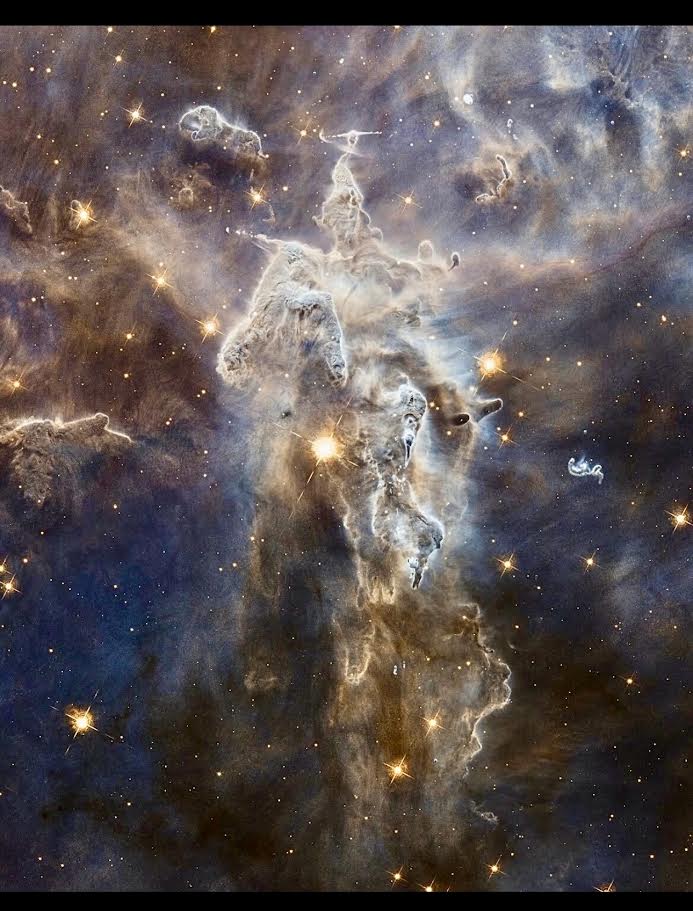
It’s the Carina Nebula, often called Mystic Mountain, located (if you believe astonomers can really gauge) roughly 7,500 light-years from earth. A horse-like head with horns? Creature-like faces in the middle? Silhouettes at the lower left and at center closer to the bottom?
Often, through the years, we have come across images from NASA that seem to have forms or faces in them with spiritual implications. Rather than a hidden figure or sign, the shapes visible in the image are towering pillars of cold hydrogen gas and cosmic dust sculpted and eroded by radiation and stellar winds from nearby young, hot stars.
Such things can be simple pareidolia, but sometimes it seems like an unseen world subtly inflecting itself on ours, imprinting a snapshot of spiritual activity on the membranes of dimensions.
A wild notion, for sure.
Now to another photograph (below) and the query of the day: authentic?
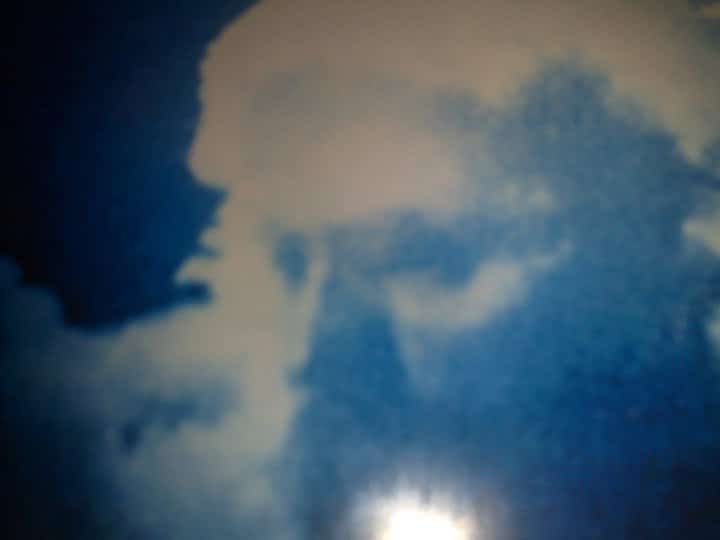
Were it recent, we’d immediately vote no. AI.
But it’s circa at least 2012. Back then it would have taken some skill, perhaps with old tools like Photoshop, Gimp, or PikMonkey.
We asked several AI tools to assess the photograph. Anthropic’s Claude commented that “its low resolution and lack of verifiable provenance make it impossible to confirm whether the cloud formation was altered or captured naturally.”
ChatGPT “leaned toward this being a real photograph of an unusual cloud or light formation rather than an entirely fabricated image. However, that is only a tentative visual impression, not authentication. There is no unmistakable sign of AI generation, but the image could have been altered using older photo-editing techniques, particularly by blending or superimposing a face into the clouds. One thing interests me: the central face seems unusually defined in its proportions compared with the surrounding cloud formations. That is worth investigating.”
Note AI using the word “me.”
In the chatroom Google’s Gemini chimed in, “No reliable signals were detected indicating how this image was created. While it was not made with Google AI, we can only detect SynthID watermarks from Google AI; you can check for SynthID markers from additional organizations and partners at synthid. Because no verifiable origin records or cryptographic watermarks are present, you should look for other supporting evidence to assess its nature.”
We did and Synthid saw no artificial markers (at least that it used). “Note however, that this may have been generated by a non-partner organization, or at a time prior to a partner adopting SynthID,” it warned prudently. Pinterest indicated the same.
And Google Lens? “Because the photo has circulated online for years without verified camera metadata or an established origin, it is not possible to confirm whether it is an unedited photograph of a cloud formation, a photographic artifact, or a digitally altered image. Viewing recognizable faces in random patterns like clouds is a common example of pareidolia [the mind forming random patterns into specific forms].”