


Do you have an altar or altars in your life?
Perhaps another way of putting it is spiritual “strongholds.”
If, in past generations, sin was brought to the family “altar,” that sin or iniquity can traverse bloodlines until the altar is broken.
If in past generations holiness was brought to the altar, that is what is trasmitted through generations.
What trends have been handed down in your family?
Think of the power of altars. We have altars at church. We also have cases where in past times “sacrifice” was brought to a pagan altar in a forest or castle coven (to use a metaphor that isn’t always a simply metaphor—for this can actually be in our familiar history. And the reason it can be used in the plural is because it can comes from paternal and maternal lineages at the same time.
There are sacrifices to darkness (sin) and sacrifices to the Lord (in the way of holiness, the Christian version of sacrifice.)
In standard Catholic Bible translations (such as the New American Bible Revised Edition or the Douay-Rheims), the singular word “altar” and its plural form “altars” appear approximately 400 to 450 times combined.
The very first recorded action Noah took upon stepping back onto dry land was building an altar to offer sacrifices of thanksgiving to God for preserving his family through the deluge.
The Divine Response: In Genesis 8:21–22, God smelled the pleasing aroma of the burnt offering and resolved never again to curse the ground or destroy all living creatures with a flood on account of human sin.
This act directly leads into God establishing His covenant with Noah and placing the rainbow in the sky as its sign in Genesis 9.
On the dark side have been and still are those who make sacrifices (including powerful blood ones) to the enemy.
The mnodern version for those on God’s side is the “sacrifice of the Mass”—which of course is carried forth from an altar. Rather than slaughtering new victims, the Mass represents the one, unrepeatable sacrifice of Christ on the Cross to the Father in an unbloody manner.
Just as Noah gathered his family around an altar after being saved through the waters of the flood, the faithful gather around the altar of the church to offer thanksgiving (eucharistia in Greek means “thanksgiving”) after being saved through the waters of Baptism (1 Peter 3:20–21).
During that holy sacrifice we can bring to the altar all the “curse” that needs to be broken—the dark “altar”—that needs to be broken and replaced.
The altar serves as the focal point where the spiritual weight, patterns, and wounds of a family’s history are brought into contact with the Mercy and Redemption of God.
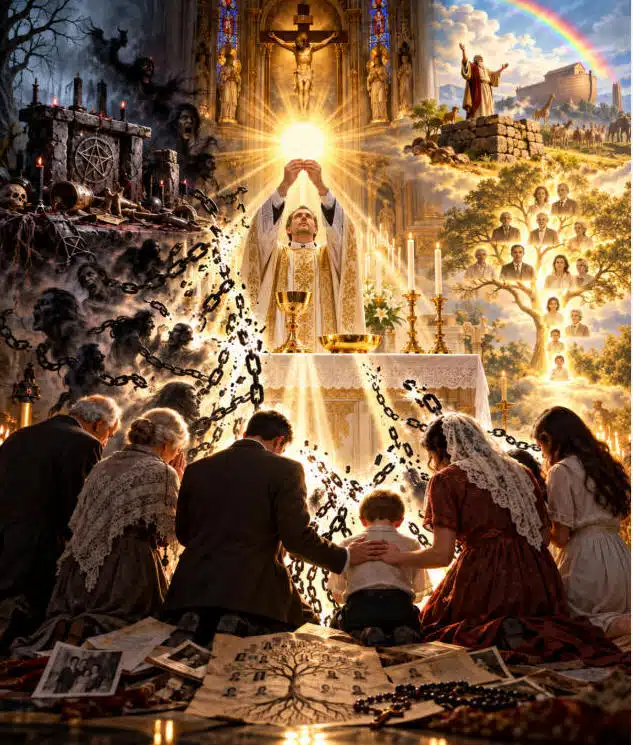
In Scripture, an altar is fundamentally a meeting point between Heaven and earth—a place where covenant sacrifices are made to cover human sin and invite Divine blessing.
Use this metapgor. Deploy this verbiage. Pray to break the wrong “altas” in your family’s ancestries.
If ancestral lines were involved in ungodly practices, occultism, or deep systemic sin, the altar is the recognized spiritual “courtroom” or sanctuary where those past ties are formally renounced and replaced with a holy covenant.
Within Catholic tradition, the Holy Sacrifice of the Mass is considered the single most powerful tool for healing generational lines.
Bring your family issues to the altar during Communion (in a list in your pocket, or simply in your heart) and smash wrong “altars.” If your priest is amenable, ask him to do a Mass in which those in attendance can write down repeating generational issues and place them physically on the altar, breaking them when the Chalice is Raised with the Blood of Jesus.
In “Masses for the Healing of the Family Tree,” written genograms or family trees listing living and deceased relatives are physically brought forward and laid directly on or near the altar.
Because the Eucharist is the re-presentation of Christ’s sacrifice on Calvary, placing generational wounds on the altar submits human family history directly to the infinite power of Christ’s mercy. Or at home, place a list on a table near a blessed candle and pray and Rosary or put a list in a jay with pictures of Jesus, Saint Michael, and the Blessed Family.
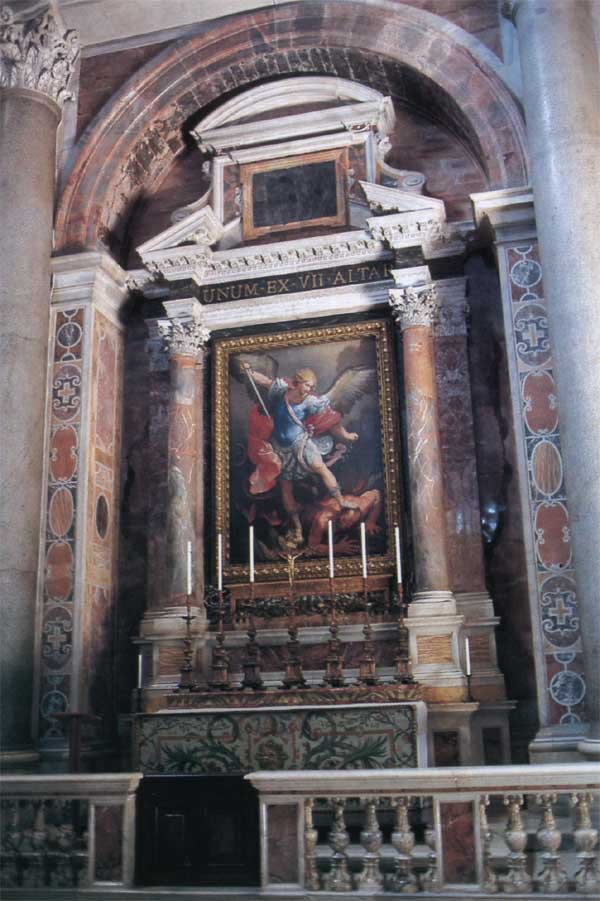
Forgive deceased or living family members for traumas they inflicted, laying the pain down at the foot of the altar. Confess personal participation in those inherited family sins, breaking a pattern of anger or addiction and washing it clean through sacramental Confession and the altar of Jesus. The table at the Last Supper was an eternal altar.
Generational healing emphasizes that modern believers cannot be punished by God for the personal guilt of their ancestors (Ezekiel 18:19–20). However, the effects or tendencies of ancestral sin (such as addiction, abuse, or lingering resentment) can repeat across generations.
Controversial?
Of course. (Isn’t everything?)
Pray to the Holy Spirit for discernment and go where He leads.